The quick answer
The Hoi An Lantern Festival is commonly used to describe Hoi An's monthly Old Town heritage night, held on the 14th day of each lunar month. Its date on the regular Gregorian calendar changes from month to month. Lantern-lit streets can also be enjoyed on ordinary evenings, but a monthly heritage-programme night is not necessarily the same as any other night in town. Check the latest local announcement before planning a trip around a specific date.
Hoi An is captivating after dark: lanterns hang above historic shopfronts, people gather beside the Hoai River, and the Old Town takes on a gentler rhythm. But visitors often arrive with the same questions. When is the actual festival? Are the lanterns there every night? Do you need a ticket? And is a riverboat ride worth it?
This independent guide explains the lunar-calendar rule, the cultural programme behind the familiar photographs, the places to explore on foot, and the practical checks that make a lantern evening easier and safer. It deliberately avoids a fixed annual date table or prices that may change.
Hoi An Lantern Festival at a glance
When
The 14th lunar day each month, subject to current local arrangements
Where
Hoi An Ancient Town, especially its historic streets and Hoai riverside
What to expect
Lantern atmosphere, community culture and activities when scheduled
What to check
Exact evening programme, Ancient Town admission rules, weather and boat conditions
When is the Hoi An Lantern Festival?
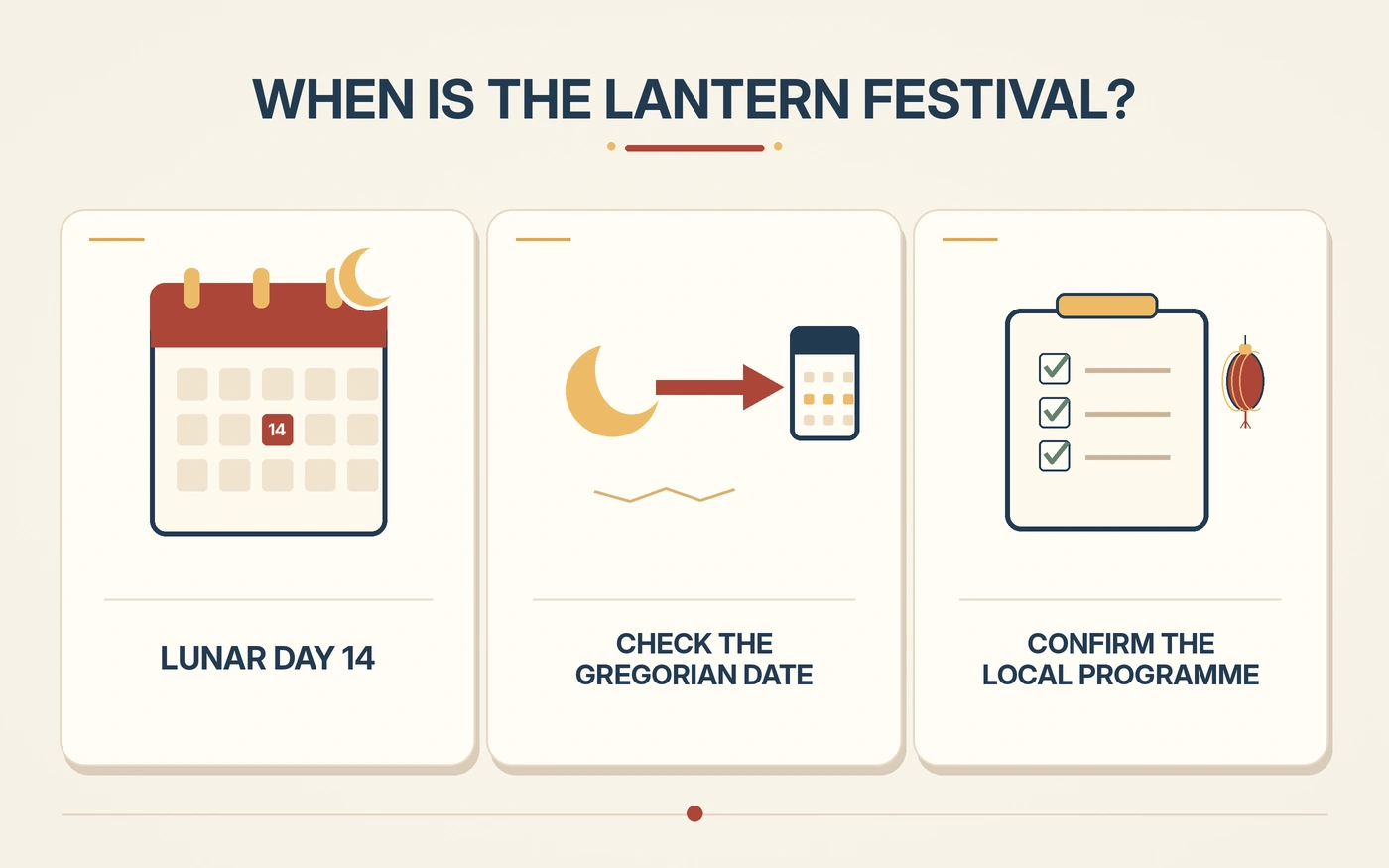
The recurring Old Town programme is associated with the evening of the 14th day of the Vietnamese lunar month. That is the most useful rule to remember. Search results frequently call it a full-moon festival, but the scheduled 14th lunar evening should not be confused with a promise that the astronomical moon will be exactly full that night.
The lunar calendar does not align neatly with the months printed on most international travel calendars. As a result, the festival's Gregorian date moves, and the gap between two festival nights can look unusual to someone searching by month. Depending on how dates fall, more than one festival night can even appear within one Gregorian calendar month. A list copied from an older travel blog can therefore be misleading.
How to find the right night for your trip
- Start with the lunar-calendar rule. Look up the 14th day of the lunar month covering your intended stay in Vietnam.
- Verify the Gregorian conversion. Cross-check with a Vietnam-local lunar calendar rather than relying on a generic international moon-phase website.
- Confirm the actual programme. Look for the latest announcement from the Hoi An heritage authorities or contact the local heritage information team. Lunar-calendar alignment alone does not prove every activity will operate.
- Recheck close to arrival. Weather, river conditions, public events and conservation work can affect what visitors experience.
What is the festival, and why is it special?
Behind the English name is a local cultural programme commonly called Đêm phố cổ (Old Town Night), formally described as a recreation of an early twentieth-century Hoi An evening. Its purpose is broader than decorating a street for photographs: it helps keep community traditions visible in a living historic town.
The heritage authority describes participation by local musical and cultural groups, including traditional instrumental performances, folk singing, poetry activities, games such as Bài chòi, and other community-led experiences. The exact selection and location can vary. A visitor should not assume that every performance will happen on every monthly occasion.
Hoi An Ancient Town is a UNESCO World Heritage Site celebrated for its well-preserved trading-port architecture and blend of local and international influences. That recognition applies to the historic town, not to a separately UNESCO-listed monthly lantern festival.
A living tradition, not an unchanged ancient show
Lantern-making and the town's cultural heritage have deep roots. However, the organised monthly Old Town Night programme has a more recent documented history: a pilot took place in the late 1990s, followed by a local direction to stage the programme regularly. It is more accurate to describe the modern event as a heritage revival than to claim that the present-day monthly programme has run unchanged for centuries. The heritage-site history explains this development.
Are Hoi An's lanterns on every night?
Many lantern displays are visible on ordinary evenings. Historic streets, shopfronts and riverside businesses can still be beautifully illuminated when it is not the monthly programme night. You do not need to plan your entire visit around lunar day 14 simply to see decorative lanterns.
The difference is what the special evening is intended to represent: a shared Old Town heritage atmosphere, potentially accompanied by locally organised cultural performances and changes in street lighting. Official descriptions say bright electric lighting gives way to a softer lantern-and-candle ambience. This does not mean that every building, business or street is guaranteed to switch off every electric light.
| Question | Ordinary evening | Monthly heritage night |
|---|---|---|
| Can I see lanterns? | Often, yes | Yes, lantern atmosphere is central to the occasion |
| Will there be heritage activities? | Some may operate independently | Community programme activities may be scheduled |
| Are all lights switched off? | No such expectation | Lighting may be softened; no blanket blackout guarantee |
| Do I need a specific lunar date? | No | Plan around lunar day 14 and verify locally |
For travellers with limited time, an enjoyable ordinary evening is still a worthwhile choice. If you are specifically interested in the community heritage programme, check the monthly date and announcements first.
What happens during a Hoi An lantern night?
The most rewarding approach is to treat the evening as a walk through an inhabited heritage district, not a single ticketed stage show. Activities can differ by location and schedule, so allow room for discovery rather than building a rigid minute-by-minute itinerary.
Walk the historic lanes
Follow the yellow-painted shophouses and lantern displays around the old streets. Pay attention to quiet courtyards and small architectural details, not only the busiest photo spots.
Listen and watch
Look out for scheduled folk music, Bài chòi, traditional games or other local community activities. The specific programme is not guaranteed on every visit.
Enjoy the riverside
Take in reflections and the movement of small boats from safe, open viewing areas along the Hoai River. Give people space at narrow landings and bridge approaches.
Try local food
Pause for a meal, dessert or drink away from the most crowded bridge entrances. Confirm prices before ordering and take particular care with dietary requirements.
You may also find artisans displaying handmade lanterns or businesses advertising lantern-making workshops. These are optional commercial activities, not a guaranteed part of the official monthly programme.
Where should you go to experience the lanterns?
Begin in Hoi An Ancient Town. Its interconnected streets make a relaxed walking visit possible, while the nearby Hoai River provides many of the familiar lantern-and-water reflections. The names Hoai River and Thu Bon River are sometimes used loosely in travel writing; they should not be treated as interchangeable directions to a particular viewpoint, pier or hotel room.
Historic streets around Tran Phu and Nguyen Thai Hoc
These streets offer an introduction to Hoi An's preserved shopfronts and lanterns. Explore at a comfortable pace and respect entrances to homes, places of worship and businesses. Some lanes can be crowded; a side street may provide a more pleasant experience than stopping in the middle of a pedestrian flow.
The Hoai riverside and An Hoi Bridge area
The central riverfront is a natural place to see illuminated boats and reflections. The An Hoi Bridge vicinity is a useful orientation point, but expect congestion at popular times. Choose an unobstructed public viewing position, keep children away from unprotected edges, and never step onto a landing or boat without the operator's permission.
Quieter lanes and a slower return route
After seeing the busy riverfront, loop back through adjoining streets rather than repeating the most crowded crossing. Pick a clear meeting point for your group before you set out. If you are travelling with a stroller or use a mobility aid, be prepared for uneven surfaces, steps at some businesses and congestion; do not assume a completely step-free route.
Should you take a boat ride or release a floating lantern?
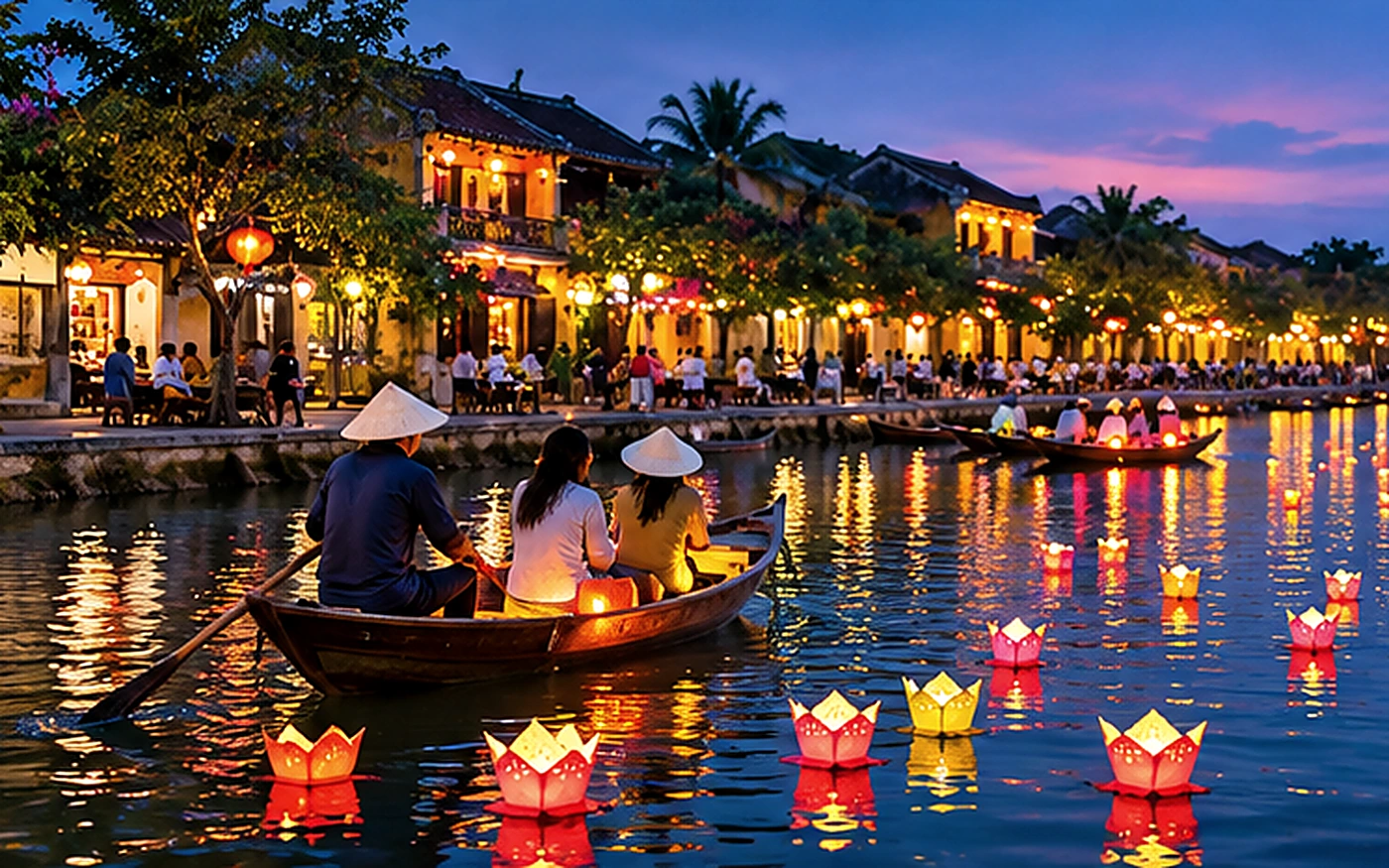
Small boats and candle-lit paper lanterns are widely associated with Hoi An evenings, and many visitors enjoy the view from the water. Neither is essential to appreciating the Old Town. A walking visit is a complete experience in its own right.
If you are considering a boat, ask the operator for the full total price, the duration, the number of passengers, where boarding and disembarkation take place, whether a floating lantern is included, and what happens if the weather changes. Do not assume that an advertised per-person price covers a whole boat or that an online listing proves a departure is available tonight.
Use only an operator who follows current local rules and provides an appropriate life jacket for each passenger. Check that the boat is not overloaded and that boarding access is safe. If you cannot assess those conditions, stay onshore. River activities may be restricted or suspended during strong rain, high water or other unsafe conditions.
A respectful approach to floating lanterns
The act of placing a lantern on the water is often described as making a wish or marking a moment of remembrance. If you choose to take part, be mindful that the river is a shared environment. Ask about local guidance and collection arrangements, avoid leaving plastic or other litter, and do not release anything into the water where it is restricted. Watching without releasing a lantern is also a respectful choice.
Is the Hoi An Lantern Festival free? What might you pay for?
It is important to separate the monthly cultural evening, Ancient Town sightseeing admission, and optional paid experiences. Travel blogs sometimes collapse them into the claim that the entire visit is free. That can be misleading.
The heritage authority's official Ancient Town visitor notice asks tourists to buy admission tickets before entering the historic area and describes the attractions and cultural activities included. However, the notice does not clearly resolve every scenario for a person arriving solely for an evening stroll or for a particular monthly programme. Check the current admission rules with the official visitor service or authorised ticket counter rather than assuming that a separate festival ticket is either always required or never required.
| Expense | How to think about it | What to check |
|---|---|---|
| Ancient Town sightseeing admission | Official heritage visitor product | Current applicable ticket, eligibility, inclusions and validity |
| Monthly heritage activities | May be covered by visitor arrangements; access rules need confirmation | Specific programme and whether your intended visit requires admission |
| Riverboat ride | Optional paid service | Total price, duration, passenger capacity and cancellation conditions |
| Floating paper lantern | Optional purchase where permitted | Price, materials and local river-release rules |
| Food, shopping or workshops | Optional individual purchases | Menu prices, inclusions and dietary or workshop arrangements |
Bring a practical payment method and ask for the total before agreeing to a purchase. Because tariffs, eligibility rules and merchant offers change, a timeless guide should not present a single fixed budget as a binding quote. For sightseeing ticket information, use the latest official visitor notice and confirm current rates before travel.
A flexible evening plan for first-time visitors
You do not need a complicated tour to enjoy the lantern atmosphere. This is a suggested sequence, not a published festival timetable; adjust it to the weather, personal pace and any locally announced programme.
Before sunset
Explore the old streets
Orient yourself, check ticket requirements, photograph architecture in natural light and choose a place for a break.
After dusk
Enjoy the cultural atmosphere
Walk between lantern displays and any scheduled community activities without rushing from one crowd to another.
Later in the evening
Visit the riverside, then leave calmly
Pause at a safe viewing point, have dinner if you wish and allow extra time for the journey back.
Build in flexibility for crowds. A planned two-hour stroll might take longer if you stop for music, photographs or food; conversely, rain or an unexpected closure may make a shorter visit the better choice.
Weather, flooding and river safety
Hoi An's riverside setting is central to its appeal, but it also means heavy rain, flooding and high water can affect streets, walkways and boat services. These conditions matter particularly during wetter parts of the year. A festival date on a calendar is not proof that a river activity, street route or performance will be safe and open.
Check current local weather warnings and river conditions on the day you visit. Bring footwear that grips on wet paving, keep electronics protected from rain and plan an alternative activity away from the waterfront. Sudden downpours can also make a crowded pedestrian area harder to navigate.
When travelling with children, agree on a meeting point, keep them within reach around bridges and boat landings, and avoid leaning over railings for photographs. If you have reduced mobility, ask about the route and access conditions in advance; do not rely on a promotional photo as proof of accessibility.
What to check before setting out
A short checklist makes the visit more predictable without turning it into a rigid schedule.
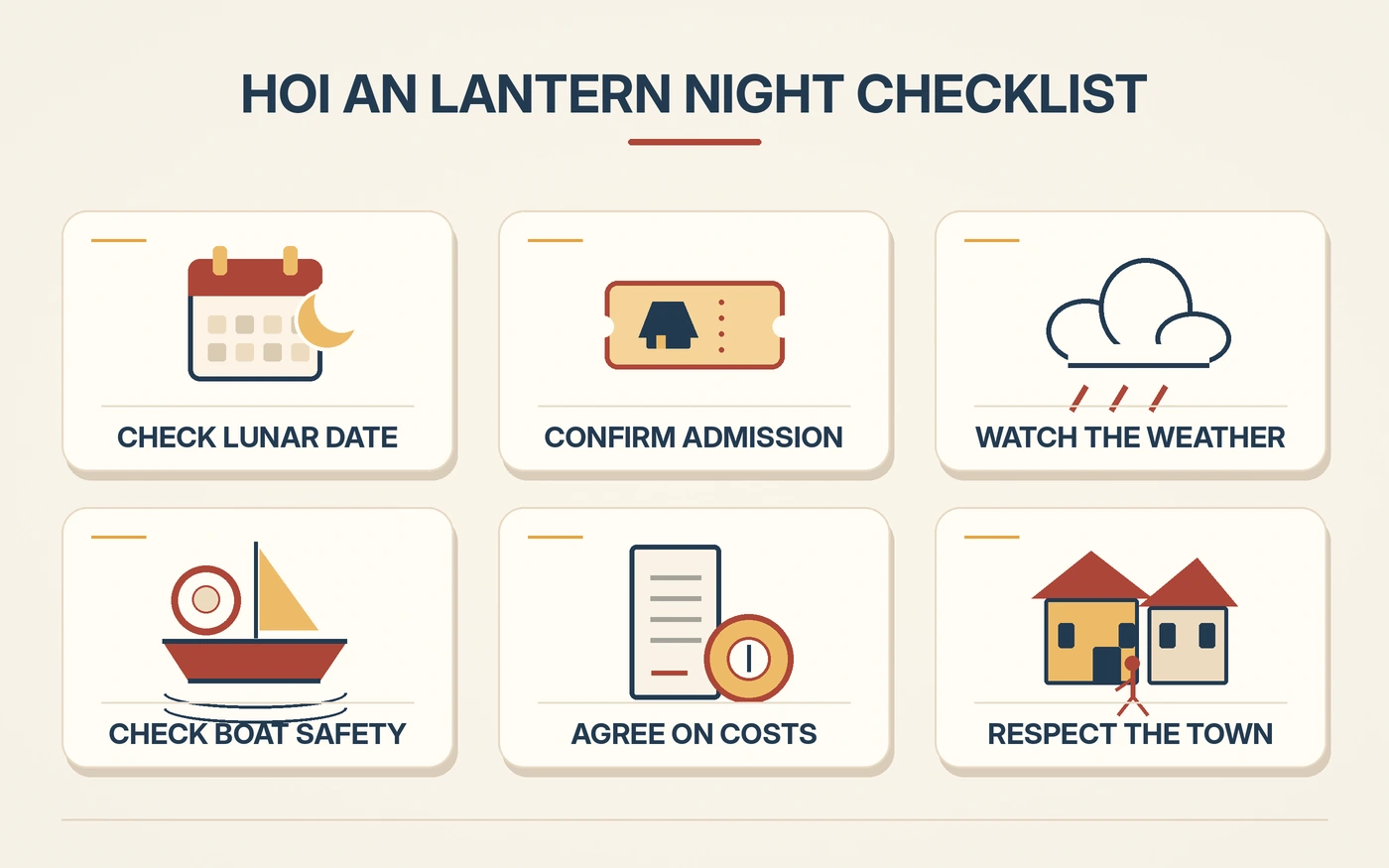
- Date: confirm the local 14th-lunar-night programme rather than relying only on a moon-phase app.
- Access: ask about the current sightseeing ticket and any eligibility or event-specific restrictions.
- Weather: check rain, flooding and river alerts before committing to a boat.
- Budget: agree on prices for optional lanterns, food, workshops or boats before paying.
- Comfort: wear walking shoes, carry water and choose a realistic route for your group.
- Respect: avoid blocking local homes and businesses, ask before photographing people and leave no litter.
Is the festival worth planning your trip around?
It depends on what you want from Hoi An. The 14th lunar night is especially interesting if you want the possibility of a community cultural programme and the heritage-focused atmosphere associated with it. It may also bring larger crowds to popular streets and river viewing points.
If your priorities are quiet photography, leisurely dining or unhurried exploration, an ordinary evening could suit you just as well. Hoi An's lanterns and historic architecture do not vanish outside the monthly programme. Travellers with only one free evening should resist feeling that they have missed the town if the lunar dates do not align.
Good choices for different visitors
Culture-focused visitors: check the local activity programme and allow time to watch and listen. Couples and photographers: walk beyond the busiest central bridge approaches for a calmer atmosphere. Families: favour predictable walking routes and avoid the river edge during crowding. Visitors with mobility needs: choose a short accessible segment after confirming conditions locally rather than trying to cover the entire Old Town in one evening.
Is the monthly lantern festival the same as other lantern events?
No. Hoi An may host special lantern exhibitions, international cultural events, craft activities or other festivals at different times. Those have their own organisers, programmes and dates. They should not be confused with the recurring lunar-day-14 Old Town Night.
Similarly, a lantern-making class is a separate hands-on experience, and an advertised lantern boat tour is a commercial product. Neither is proof that the monthly cultural programme is running on the date of the booking. Verify the exact event name and operator before paying for anything described as a “lantern festival experience.”
Hoi An Lantern Festival: frequently asked questions
When is the Hoi An Lantern Festival?
The recurring Old Town heritage night is associated with the 14th day of each Vietnamese lunar month. The Gregorian date changes, and the exact programme should be confirmed with local heritage organisers.
Is the festival held on the full moon?
It is often called the Full Moon Lantern Festival, but the programme is scheduled by the 14th lunar day. Do not substitute the precise astronomical full-moon time for the local festival calendar.
Can I see lanterns in Hoi An on a normal night?
Often, yes. Lantern decorations are part of the Old Town's evening atmosphere beyond the monthly event. Cultural activities and lighting arrangements may differ from those on the designated heritage night.
Do I need a ticket to attend?
Do not assume the whole visit is free. Official Ancient Town sightseeing admission rules exist, while the application to a particular evening-only visit may require clarification. Check current requirements with the official visitor service or ticket counter.
What time should I arrive?
Arriving before sunset gives you time to get oriented and enjoy the transition to evening. Check the actual programme if you want to see a particular performance; start and finish times may change.
Can I take a lantern boat ride?
Boat services may be offered, subject to local rules and safe conditions. Confirm the full price, inclusions and life-jacket arrangements before boarding. Do not take a boat during unsafe river conditions or when operations are restricted.
What happens if it rains?
Some activities or river services may change, be delayed or be suspended. Follow local announcements and safety restrictions; avoid flooded streets, slippery river steps and high-water boat trips.
Is it the same as an international lantern festival or a lantern-making class?
No. Special international lantern events and paid craft workshops can have separate organisers, dates and conditions. The regular Old Town Night follows a monthly lunar-calendar pattern.
Official sources and last-minute checks
For a reliable visit, use the event description and current visitor notices from local authorities rather than depending entirely on a dated travel-blog calendar. These sources explain the cultural context and are useful starting points for confirming current arrangements:
- Hoi An heritage authority: monthly Old Town Night and community activities
- Hoi An heritage authority: Ancient Town visitor admission information
- Vietnam Tourism: visiting Hoi An and its lantern tradition
- UNESCO World Heritage Centre: Hoi An Ancient Town
This is independent travel information, not a ticket sale, tour reservation or guarantee that a particular programme, boat operator or venue will be available. Verify opening, access, pricing and safety conditions directly before visiting.