Wondering what to do in Ho Chi Minh City on your first visit? Start with the kind of day you want, not the longest possible checklist. Vietnam's largest city—still widely called Saigon—can be a place for modern history, lively markets, memorable meals, contemporary architecture, or simply watching everyday life unfold over a coffee.
Some of the best things to do in Ho Chi Minh City are close enough to combine in a relaxed city-centre outing. Others, including the Cu Chi Tunnels and journeys into the Mekong Delta, deserve their own time and preparation. This guide helps you make that distinction, choose experiences that suit your energy and interests, and build a flexible visit without assuming every attraction, ticket or transport service operates unchanged.
Best things to do in Ho Chi Minh City: choose your kind of day
There is no single perfect Saigon itinerary. A traveler who loves museums may want a completely different day from someone visiting with young children or seeking markets and coffee. Use this quick decision table before choosing where to go.
| Your priority | Good starting points | Practical consideration |
|---|---|---|
| History and architecture | Independence Palace, War Remnants Museum, Central Post Office | Leave room for exhibits; check opening notices and any sensitive content |
| Markets and local neighborhoods | Ben Thanh Market, Nguyen Hue, Cho Lon and Binh Tay Market | Cho Lon is a separate neighborhood outing, not the next stop on a short downtown walk |
| Food and coffee | Local breakfast, a coffee break, a market-food wander | Choose venues and dishes to fit dietary needs, weather and comfort |
| Skyline and an easy evening | Riverside streets, central architecture, an optional viewpoint | Check entry products, sunset conditions and venue hours beforehand |
| Rain or low-energy day | Selected museums, indoor cafés, a shorter heritage loop | Severe weather may disrupt even indoor plans; check transport and openings |
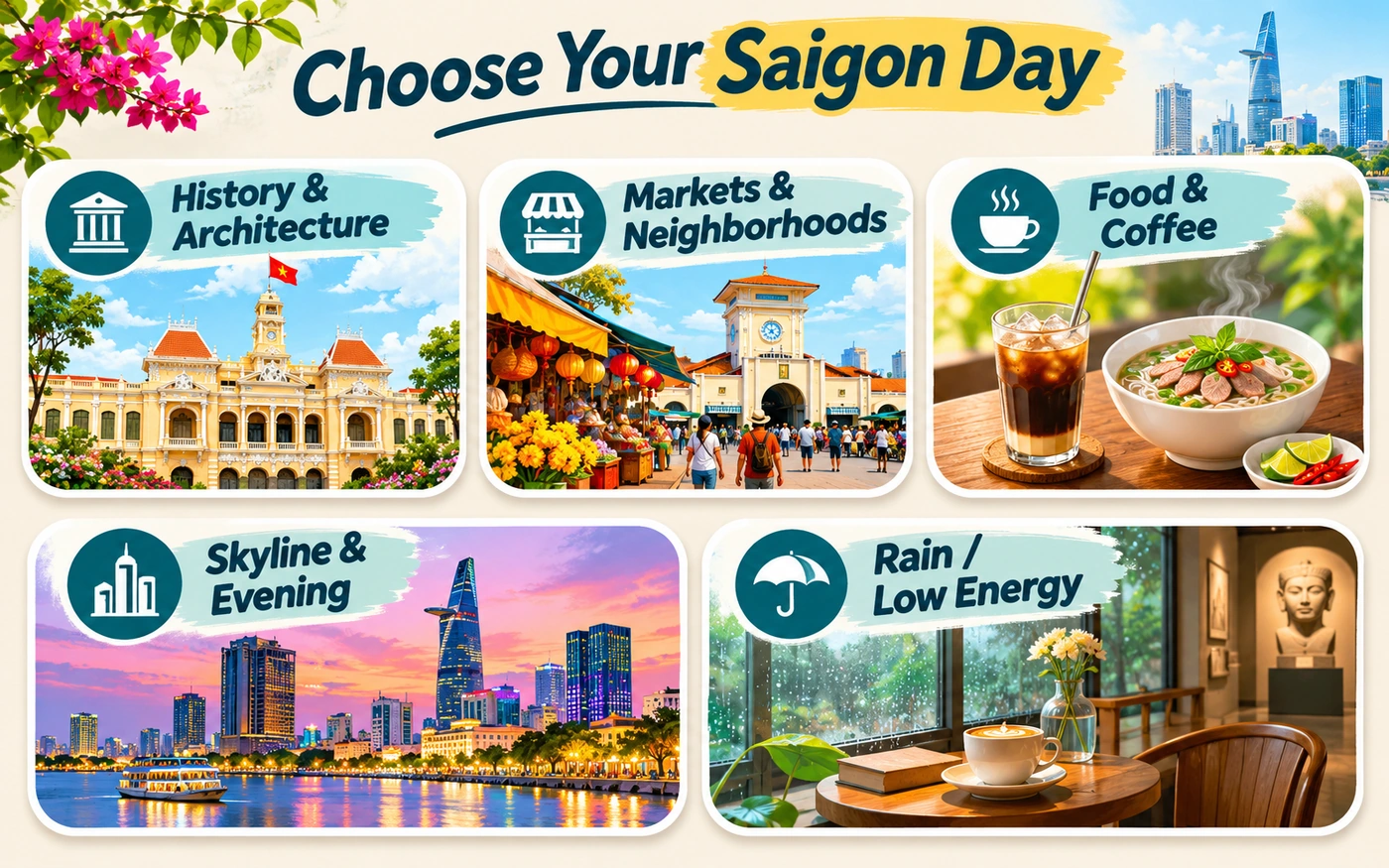
A manageable first-day combination might pair one major historical site with the Central Post Office area, a proper meal and an unhurried stroll near Nguyen Hue. That gives you a sense of the city without treating traffic, heat, queues and museums as negligible. If you have more time, give Cho Lon or an out-of-centre excursion a separate block.
Quick rule: choose one anchor experience for each half of the day. Everything else is optional. This makes it easier to change plans when rain, crowds, access restrictions or tired feet intervene.
Historic highlights in the city centre
Historic buildings and museums explain why the city is more than a collection of photo stops. They also require different amounts of time and attention. Instead of rushing through three major attractions, choose the one that best matches your interest in architecture, twentieth-century history or local memory.
Explore Independence Palace
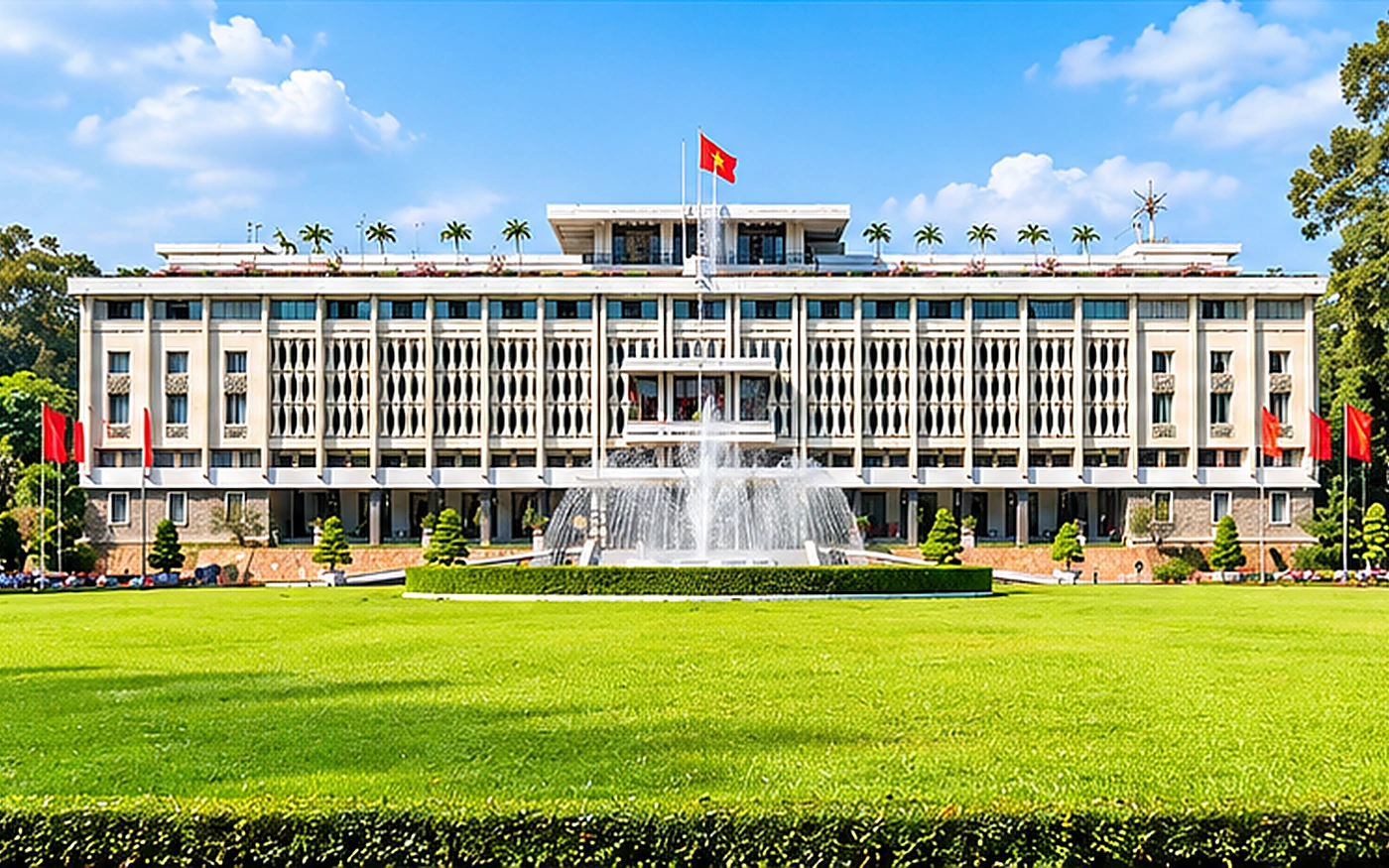
Independence Palace, also called Reunification Palace, is a strong first choice if you want to understand a defining site in modern Vietnamese history. Its architecture, reception rooms and preserved interior spaces give the visit more substance than an exterior photograph alone. It is especially rewarding if you enjoy exploring how a building was used, rather than only admiring its façade.
Check the Palace's official visiting information before going. Ticket categories, ticket-counter hours and entry gates are not necessarily interchangeable; special events may also change public access. Plan enough time to read the displays and consider whether stairs, long walking sections or heat might affect your group.
Visit the War Remnants Museum thoughtfully
The War Remnants Museum presents photographs, documents and objects connected to war and its human consequences. It can be one of the city's most impactful experiences, but it is not a light stop to squeeze between shopping and lunch. Some displays contain graphic or distressing images. Visitors traveling with children or anyone sensitive to this material may prefer to review the exhibition descriptions first or choose another museum.
If you decide to visit, give the displays time and engage with them respectfully. Check the museum's own ticket terms for admission categories, entry cut-offs and current fees; older city guides may show different figures. A closing time does not necessarily mean the ticket counter accepts arrivals until that minute.
See the Central Post Office and Notre-Dame Cathedral area
The Saigon Central Post Office is a familiar architectural landmark near Notre-Dame Cathedral Basilica. Together, the buildings make an appealing short stop around the historic centre, particularly for travelers interested in architecture and city photography. Treat them as two distinct places with different functions: the post office is a working building, and the cathedral is a place of worship.
The cathedral has been undergoing restoration, and normal sightseeing access to the interior may be restricted. Enjoy the area from permitted public viewpoints and check the cathedral's official website for current conditions. Do not assume religious services grant general tourist entry. For the post office, respect active counters, staff directions and any temporary restrictions.
These central highlights form a practical heritage theme, not a promise that every entrance is open or that all stops can be reached without road crossings. If a site is closed, use the extra time for a nearby café, Book Street or a slower architectural walk.
Markets, neighborhoods and everyday city life
Markets and walking streets are where a visitor can see the city in motion. They are also places where normal commerce matters more than photo opportunities. Keep belongings secure, avoid blocking vendors or customers and ask before taking close-up photographs of people.
Browse Ben Thanh Market without a shopping agenda
Ben Thanh Market is a familiar city landmark, with stalls associated with food, clothing, souvenirs and daily goods. You can explore it even if you do not intend to buy anything. Look at the types of produce and ingredients on display, decide whether a meal or snack appeals, and compare prices calmly before making a purchase.
Market trading varies by stall, and nearby evening activity should not be confused with a guaranteed late-night schedule for every vendor inside the building. Bring small, convenient payment options, agree on prices when necessary and do not plan around an unverified closing hour. For a crowd-sensitive visit, consider a shorter market stop followed by time outdoors or in a quiet café.
Walk Nguyen Hue and the riverfront area
Nguyen Hue is a central boulevard associated with public life, landmark architecture and the nearby Saigon River. It works well for an easy evening stroll, observing the city, or pairing a coffee break with a look at the exterior of City Hall. Events, temporary barriers and traffic arrangements can change how parts of the area are used.
You do not need to book a cruise or an observation deck to enjoy a city view. Walking along a public riverside area, where permitted and safe, may be enough. If you do choose a paid experience, check the named operator, weather policies, departure point and return arrangements independently.
Give Cho Lon and Binh Tay Market their own outing
Cho Lon, often associated with the city's Chinese-Vietnamese heritage and commercial history, provides a different perspective from the central sightseeing zone. Binh Tay Market is one useful starting point. The surrounding area is active and commercially oriented, rather than a staged heritage park.
Allow for transport between Cho Lon and the central landmarks instead of putting them in one rushed walking loop. If you also visit a temple or assembly hall, dress and behave respectfully, make space for worshippers, and check photography rules at the entrance. Cho Lon is a strong choice for a second day when you are ready to explore beyond the most familiar first-visit sights.
Food, coffee and evening ideas
One of the pleasures of Ho Chi Minh City is the range of everyday eating and drinking experiences. A useful food plan does not need a fixed list of supposedly perfect restaurants. It needs a little curiosity, a realistic approach to dietary needs and room to follow the neighborhood you are already exploring.
Start with a local meal that suits you
Commonly encountered choices include cơm tấm (broken rice, often served with grilled meat), bánh mì, noodle soups and fresh rolls. Menus and preparation styles vary. If you avoid meat, seafood, peanuts or particular sauces, ask explicitly about broth, condiments and shared cooking equipment rather than assuming the appearance of a dish tells the whole story.
For a lower-pressure first meal, choose somewhere with a readable menu and a seating setup that suits your group. Watch how food is handled, use your judgment about cleanliness and avoid treating a busy stall as proof of hygiene or allergen safety. Carry drinking water, especially on a hot walking day.
Make coffee part of the itinerary
Vietnamese coffee culture is an experience in itself. An iced coffee can make a welcome pause between museums; a quieter café may be a better destination than a crowded viewpoint if it is raining. Look for the style that suits you, from strong coffee with condensed milk to lighter or non-coffee drinks.
Some cafés occupy older buildings with stairs, narrow entrances or uncertain lift access. If mobility matters, check the entrance and seating before going. Treat photogenic café buildings as functioning businesses and homes, not spaces where every stairwell or balcony is automatically open to visitors.
Choose an evening without pressure to party
The city offers a range of evening moods: an early dinner, a walk around Nguyen Hue, a casual dessert stop, a live performance when one is scheduled, or nightlife in more energetic streets. Bui Vien is one well-known nightlife area, but it is not essential to understanding Saigon and may not suit travelers seeking a quiet evening.
If you go out late, arrange a safe return journey, mind your belongings and verify the exact location of any performance or venue. Do not assume a particular river cruise, market or show runs every night of the year. A short, relaxed evening is a valid way to enjoy the city.
City views, museums and rainy-day alternatives
A skyline viewpoint or a less prominent museum can make a good alternative when you want a change from the central historic loop. Buildings such as Bitexco Financial Tower and Landmark 81 are recognizable parts of the contemporary skyline, but access to paid observation experiences, particular floors and ticket products must be checked directly with the venue.
If the weather is cloudy, a costly view may be less rewarding than a café with a window or a riverside stroll during a dry interval. The best view is the one you can actually enjoy, rather than the highest platform on a list.
Build a practical indoor fallback
Rain does not have to cancel the entire day. Keep an indoor alternative near the area you are visiting: a museum whose exhibits interest you, a sheltered café, a bookshop or another venue with confirmed opening arrangements. Consider a smaller cultural museum if you would rather not spend several hours on war-related exhibitions.
Heavy rainfall can still affect road access, walking routes and building operations. A covered destination is not automatically safe to reach in a storm. Use the time to shorten your route rather than crossing flooded streets to preserve a rigid itinerary.
If the sky clears
Choose a public outdoor stretch, an architectural exterior or a market walk. Keep one flexible stop rather than sprinting between distant districts.
If the rain continues
Choose a nearby indoor attraction that is confirmed open, allow for slower transport and postpone non-essential river or open-air experiences.
Is Cu Chi worth a day trip?
The Cu Chi Tunnels are an important historical site outside the central sightseeing area, not another stop beside Ben Thanh Market. Visitors go to learn about the underground network and wartime conditions through site displays and guided interpretation. If this is a priority, give the excursion its own substantial block of time rather than combining it casually with a full downtown museum schedule.
There are different visitor areas, including Ben Dinh and Ben Duoc. Routes, ticket inclusions and physical experiences may differ. Information from commercial travel pages does not establish one universal fee for every site or visitor category. Start with the city's Cu Chi visitor information and seek current site-specific confirmation before traveling.
Should you enter the tunnels?
That decision is personal. Narrow underground passages, stairs, low ceilings, humidity, heat and confined spaces may be unsuitable for some visitors. Ask the site what can be seen without entering tunnels, whether there are alternative paths and what help is available before buying a ticket. Never assume every member of a family or group can or must complete the same route.
Travelers chiefly interested in city architecture, food or neighborhood life may prefer to remain in central Ho Chi Minh City. Those interested in the history may consider Cu Chi a worthwhile separate excursion. Neither choice makes a first visit incomplete.
Other optional day trips
There is more to southern Vietnam than the city centre, but a day trip makes sense only when its travel burden, weather exposure and accessibility fit your plans. An excursion is a different kind of day from a walkable Saigon itinerary.
Mekong Delta: waterways and regional life
A Mekong Delta outing can introduce waterways, agricultural landscapes and a different pace of life. The destination is a broad region, not a single attraction with a fixed journey time. Itineraries vary by departure point, stops, boats, road conditions and operator. If a tour includes boating, check safety equipment, weather policies, cancellation terms and what the quoted price actually covers.
Do not book an ambitious evening plan back in the city on the assumption that every excursion returns at an exact hour. Independent travelers should verify their own transport and understand which locations are realistic for the amount of time available.
Can Gio: mangroves rather than another city sight
Can Gio offers a different landscape to the dense urban centre. Its mangrove environment is recognized by UNESCO's Man and the Biosphere Programme, which describes the reserve's ecological importance. That recognition does not, by itself, mean every area is open to tourists or that a particular boat, wildlife encounter or itinerary is available.
Check protected-area rules, current routes, weather, transport and any guide requirements before visiting. If your time is short, you may get more from a full day within the city than from a hurried out-and-back nature trip.
Excursion decision: if you only have one full day in Ho Chi Minh City, prioritize the central sights that matter to you. Consider Cu Chi, the Mekong Delta or Can Gio when you can dedicate enough time to a single excursion.
How to get around Ho Chi Minh City
The city mixes walkable pockets with wide roads, busy junctions and distances that are easy to underestimate. Many first-time visitors are most comfortable using a combination of walking and a reputable car ride-hailing or taxi service for transfers between neighborhoods.
Walking and crossing streets
Walk for short central clusters when the weather and your energy allow. Choose marked crossings where available, pay attention to turning traffic and avoid sudden movements into vehicle paths. Sidewalks may be uneven, occupied or interrupted, so an apparently short map route can feel different on the ground.
Keep phones and bags secure near road edges and while using transport. If something feels unsafe, a short vehicle transfer can be a better choice than insisting on a walking plan. Travelers with mobility needs should check curb cuts, steps and pavement conditions rather than assuming every central street is barrier-free.
Using Metro Line 1
Metro Line 1 connects the Ben Thanh area with the eastern side of the city toward Suoi Tien. It can be useful when a station is near both your starting point and destination, but it is not a substitute for every city route. Check the metro operator's current service notices for timetables, fares, station access and ticket options before setting out.
Special-day promotions should not be treated as permanent free travel. Likewise, identity-linked payment methods may have eligibility conditions that differ for overseas visitors. Look for the option offered to you at the station rather than relying on a dated screenshot from another traveler.
Taxis, ride-hailing and motorbikes
Use clearly identified transport services, confirm the vehicle and destination, and keep your pickup point in a safe place away from traffic. If considering a motorbike or scooter, remember that local driving law, your valid license or permit, insurance coverage, helmet use, weather and personal riding ability all matter. Renting one is not a universal recommendation for visitors unfamiliar with the roads.
For background travel precautions, see the UK government's Vietnam safety guidance and apply the rules relevant to your own nationality and insurer. Allow slack between scheduled activities: congestion and rain are part of practical planning.
One, two or three days in Ho Chi Minh City
The point of a first-time itinerary is to see enough to understand the city, not to finish every attraction on a search results page. The following plans are flexible examples. They do not assume fixed admissions, predictable traffic or perfect weather.
| Time available | Core approach | What to leave flexible |
|---|---|---|
| One day | One major history visit; Central Post Office area; one meal; Nguyen Hue or another nearby stroll | Skip a second big museum if your first takes longer; keep the evening optional |
| Two days | Day one central sights; day two Cho Lon and Binh Tay plus food, coffee or another local interest | Swap a museum or market for an indoor stop if rain or fatigue changes the plan |
| Three days | Keep two varied city days and choose either a third neighborhood day or one dedicated excursion | Choose only one substantial out-of-centre trip; do not squeeze several into one day |
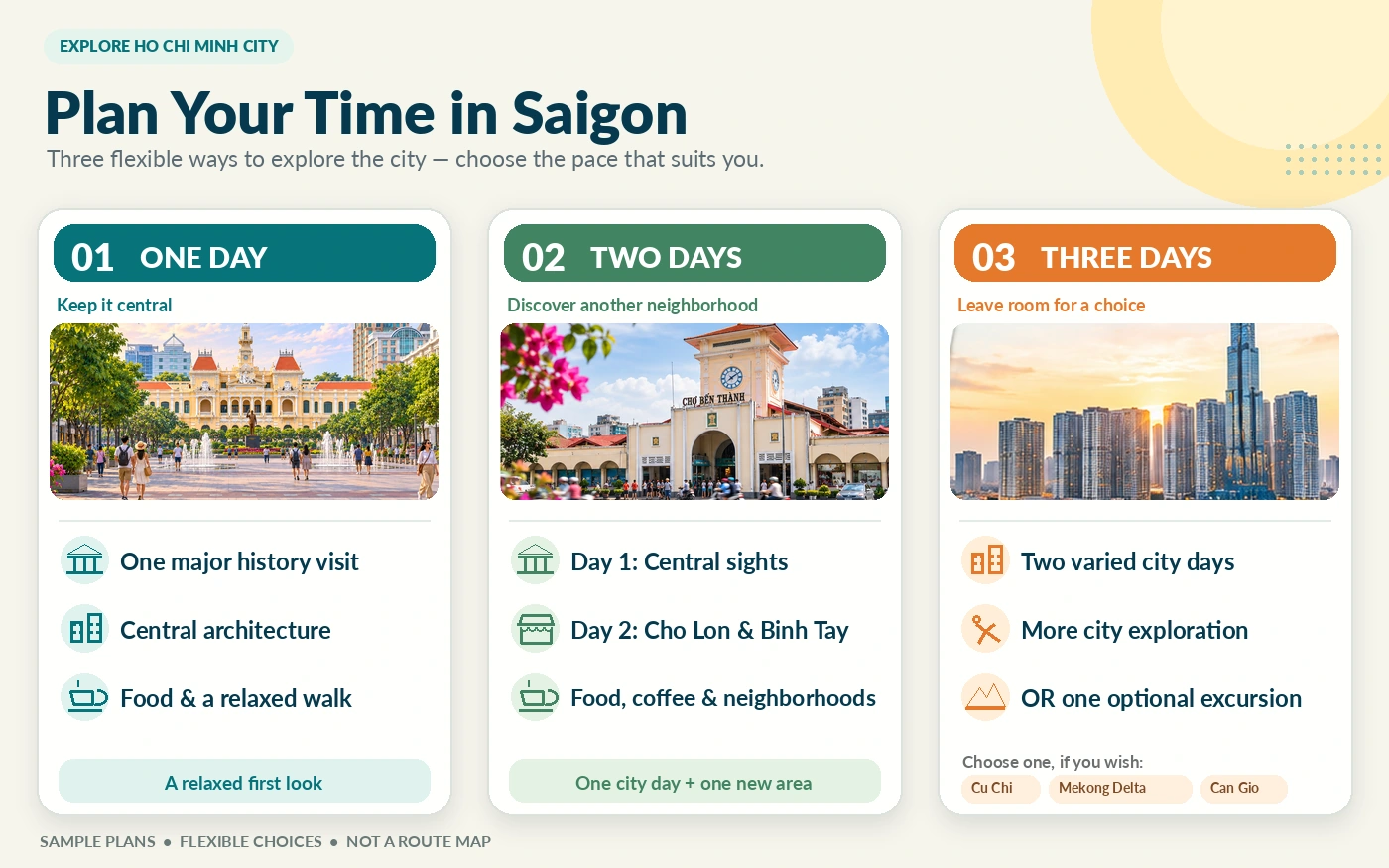
A balanced one-day first visit
Begin with Independence Palace or the War Remnants Museum, depending on your interests and the type of experience you want. Have a relaxed lunch. Continue to the Central Post Office and cathedral area for an architectural stop, subject to access and restoration conditions. Finish with a café, a market browse or a walk toward Nguyen Hue.
This is a theme-based route, not a timed tour. Check the opening and last-entry rules of your chosen anchor site before deciding where to start. A museum visit may take more attention than you expect, and the best adjustment is often to remove a stop rather than rush.
What a second day adds
Spend part of your second day in Cho Lon, with Binh Tay Market as an orientation point. Explore a food or cultural interest nearby if it is accessible and open. Back in a different part of the city, consider another museum, a café or a quiet riverfront walk. You will see more variety than if you repeat the same central attractions.
How to use a third day
Choose between going deeper into Ho Chi Minh City and leaving it for a single excursion. A city day could focus on food, coffee, neighborhoods and a viewpoint. An excursion day could be Cu Chi or a carefully researched Mekong Delta or Can Gio visit. Choose according to your interests, conditions and travel companions—not because an itinerary claims every location is a must-see.
Cost, tickets, accessibility and family considerations
Ho Chi Minh City can work with different travel budgets, but costs vary sharply by experience. A public street walk and a ticketed museum visit are not the same as a guided excursion, private transfer or observation deck. Instead of relying on a single published daily budget, separate your likely expenses into admissions, transport, meals, optional paid activities and a contingency amount.
Check the right ticket, not just a headline price
Before paying, identify the precise venue, visitor category, ticket inclusions, entrance gate and time window. A Palace ticket covering one area may not include the same exhibition spaces as another product. Museum price listings can also change or disagree across third-party sites. Operator ticket rules are the best starting point, but should still be checked close to your visit.
For Cu Chi or any tour, distinguish site admission from transport, guide services and optional activities. An advertised tour price is not necessarily the complete cost. StartInVietnam provides independent editorial information here; it does not sell or operate the experiences described in this article.
Accessibility is venue-specific
Central landmarks, older buildings, markets, tunnels and boats have very different physical conditions. Ask about step-free access, elevators, toilets, seating, surfaces and staff assistance for the exact place you intend to visit. A photo of a lift or ramp does not prove an entire historic site is wheelchair-accessible.
If you travel with a stroller, limited mobility or heat sensitivity, make a shorter route with a comfortable transfer and a nearby indoor fallback. Avoid choosing underground passages or demanding stair routes without checking the conditions first. Public transport station access should also be verified for your intended entry and exit.
Visiting with children or mixed-interest groups
Let each traveler help choose the day's anchor activity. A museum with graphic war photographs may not suit everyone; a spacious public street, market-food stop or less intense exhibition may be preferable. Children may need frequent breaks, shade and reliable food options, while adults may value uninterrupted time in museums. There is no need for the whole group to follow one physically demanding activity.
For religious sites and working markets, explain respectful behavior beforehand. Confirm the suitability and safety rules of paid activities directly with the provider. If an excursion has age, height, mobility or safety limits, do not assume an online description is complete.
Best time to visit and rainy-season planning
Ho Chi Minh City is warm through much of the year, but the experience of walking around changes with rain, humidity and sunshine. The Vietnam tourism authority's destination overview generally describes a drier part of the year from around December to April and a wetter period from around May to November. These are broad seasonal patterns, not guarantees for a particular date.
Plan around comfort, not only calendar months
For outdoor visits, consider starting earlier in the day and allowing breaks indoors. Carry water, sun protection and a light rain layer when appropriate. Shoes that handle wet pavement and uneven walking surfaces can be more useful than an ambitious attractions list.
On a rainy day, keep just one or two essential stops in the same general area and choose a nearby alternative. In a severe storm, follow official warnings and avoid flooded routes, river activities or unnecessary long transfers. Current conditions matter more than generic advice about the best month.
A simple plan B
- History day interrupted by rain: prioritize the museum or Palace you have verified is open, then move to a sheltered meal nearby.
- Market day too crowded or hot: shorten the market stop and choose a café or an accessible indoor venue.
- Skyline visibility poor: postpone the paid viewpoint and enjoy city architecture or local food instead.
- Excursion weather uncertain: review cancellation terms and transport safety before departing; keep a city-based alternative ready.
These substitutions make your visit resilient. The aim is to enjoy the place you are in, not to force a fixed timetable when circumstances change.
Frequently asked questions
Is Saigon the same place as Ho Chi Minh City?
Yes. Saigon is widely used as a familiar name for Ho Chi Minh City, particularly in everyday speech and travel writing. Searches for things to do in Saigon or things to do in HCM City usually refer to the same destination. Use whichever name is helpful for conversation and navigation; confirm the precise address of any place you plan to visit.
How many days do I need in Ho Chi Minh City?
One full day can cover a carefully chosen central heritage experience and some city life. Two days let you add a different neighborhood, such as Cho Lon. Three days offer more space for museums, food and an optional excursion. The right answer depends on your interests, pace, mobility and onward travel arrangements.
What are the best Ho Chi Minh attractions for first-time visitors?
Common starting points include Independence Palace, the War Remnants Museum, the Central Post Office area, Ben Thanh Market and Nguyen Hue. The best combination is not necessarily all five. Choose one substantial indoor or historical stop, add a compatible nearby experience and leave time for a meal or coffee.
Should I choose Cu Chi Tunnels or more time in the city?
Choose Cu Chi if the historical subject interests you and you can allocate a separate excursion block, including transfers and physical-suitability checks. Choose the city if you would rather spend time in museums, markets, architecture and neighborhoods. Neither option is compulsory for a satisfying first visit.
Is the War Remnants Museum suitable for children?
Some displays contain graphic and emotionally difficult material. Suitability depends on the child and family, not a universal age rule. Review the museum's information, discuss the subject in advance and be prepared to choose another activity or leave an exhibition if necessary.
Can I explore Ho Chi Minh City without renting a motorbike?
Yes. Short walks, available metro services and reputable car-based transport can cover many visitor needs. Public transport routes and ticket methods should be checked for your journey; using a scooter is not necessary and comes with legal, insurance and safety considerations.
What should I do in Ho Chi Minh City when it rains?
Switch to an open museum, indoor cultural venue or comfortable café near your current neighborhood. Check real-time weather and transport conditions first; do not assume indoor destinations are reachable during severe rainfall. Keep outdoor strolls and excursions as flexible options.
For a broader introduction to the destination and its major landmarks, consult Vietnam's national tourism guide to Ho Chi Minh City attractions. Then use the official venue and transport links above to check the details that can change between planning and arrival.