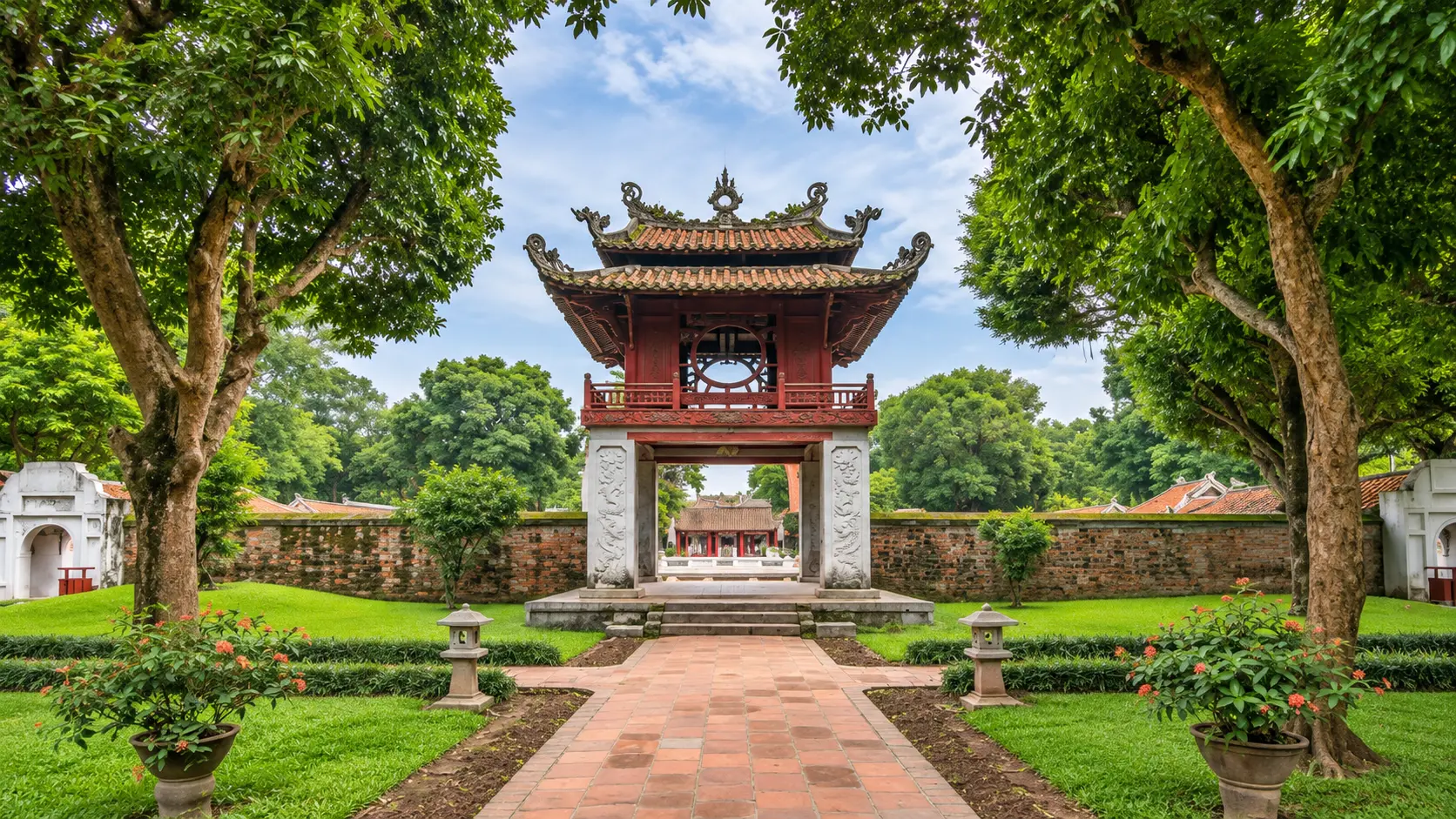
There are genuinely free things to do in Hanoi if you focus on public streets, lakeside promenades, outdoor architecture and a small number of heritage sites that explicitly publish no-fee entry. The important distinction is between walking around a place for free and entering a museum, temple, performance venue or restricted area. You do not need to pay for an organized tour to enjoy central Hanoi, but a zero-admission plan is not necessarily a zero-spend day.
This self-guided guide is for short-stay visitors. It separates activities that are normally free from exterior-only views, conditional no-fee entry and ticketed or restricted sites. Admission policies, opening arrangements and event access can change; use the linked official sources to check details before your visit.
| Activity | What can be free | What to check |
|---|---|---|
| Hoan Kiem Lake | Public lakeside promenade | Do not confuse the lake with ticketed Ngoc Son Temple |
| Old Quarter | Independent street walk and outside views | Temples, shops, tours and meals may cost extra |
| Cathedral and Opera House | Exterior views from public surroundings | Interior access and performances are separate |
| Dong Xuan and night-market area | Browsing without purchases | Weekend market operation and changing street access |
| 48 Hang Ngang, 5D Ham Long, 90 Tho Nhuom | No-fee entry published by their manager | Weekday-only listed hours; verify any closure or special condition |
| West Lake and Truc Bach | Selected accessible public waterfront streets | No promise of a continuous or step-free loop |
Are there really free things to do in Hanoi?
Yes. A public-street walk around the Old Quarter or along Hoan Kiem Lake does not require an admission ticket. By contrast, the fact that a temple is visible from the street does not make its grounds or galleries free. Hanoi travel lists frequently mix free places with inexpensive paid attractions, so it is worth deciding what kind of access you actually want before leaving your accommodation.
What free means: public access, exterior-only, time-bound and conditional
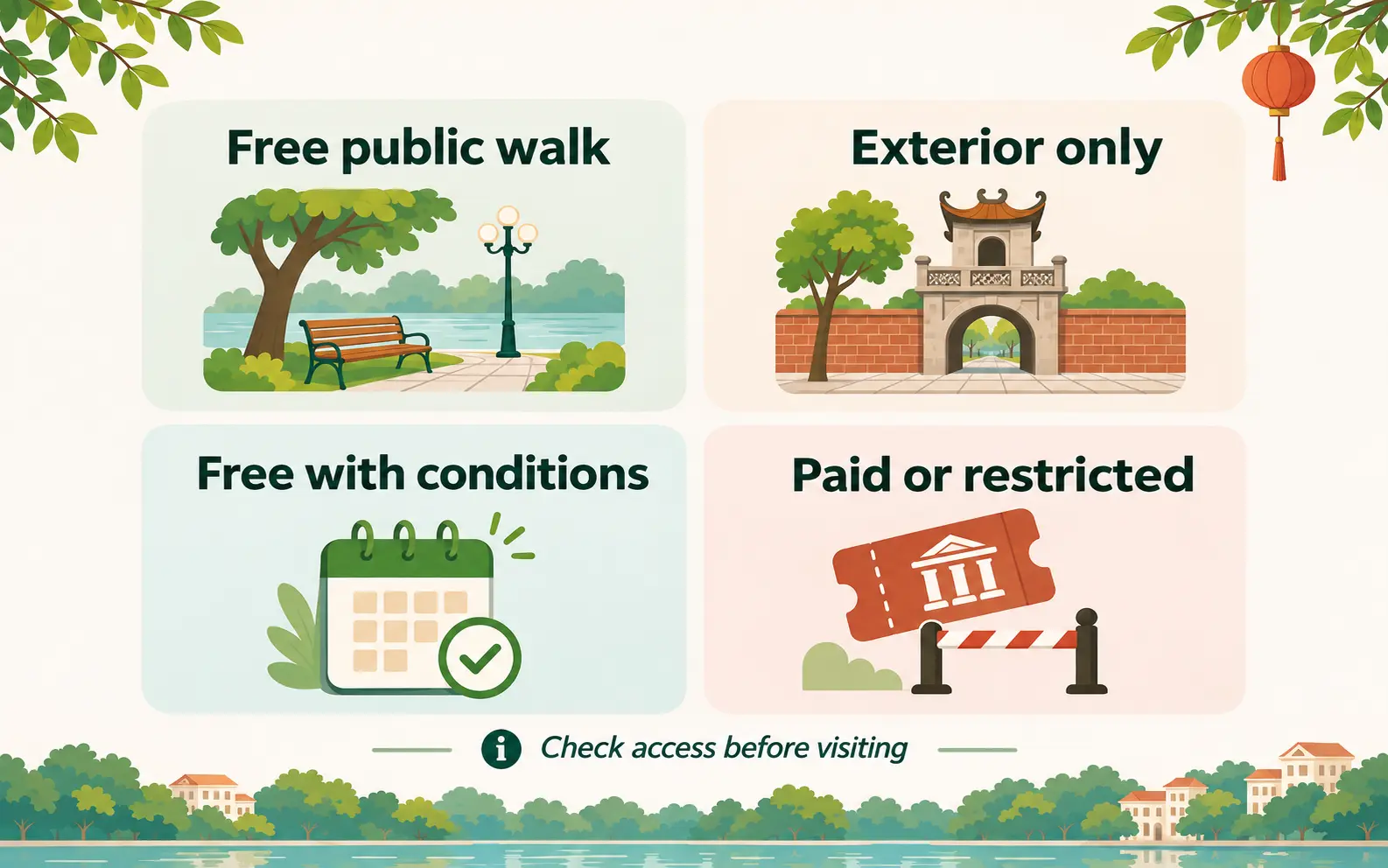
We use four practical labels. Free public access covers a normal public pavement or promenade without an attraction ticket. Free exterior view means you can look at a building or monument from a lawful public area, without claiming entry to the building itself. Conditionally free covers a published no-fee historic site with an operating schedule or a weekend-only pedestrian space. Paid, restricted or unverified activities should not be sold to yourself as zero-admission choices. These labels describe the specific activity, not the whole district.
When a ticketed interior is not part of a free street walk
A walk beside Hoan Kiem Lake can include photographs of the lake and nearby public monuments. Crossing into Ngoc Son Temple is a different visit with its own ticket rules. The same boundary applies when an outdoor view of the Opera House turns into attending a performance, or when passing the Temple of Literature turns into buying a heritage-site ticket. Choose the free exterior if that is your goal; budget separately when you actually want the inside experience.
Why a zero-admission activity is not a zero-spend day
A trip across Hanoi may still involve buses, taxis, parking, water, snacks, restrooms, shopping or mobility arrangements. Even a free activity might need a journey you would not otherwise make. The plans below are zero-ticket ideas, not promises that every traveler can spend nothing all day. Bring a realistic personal budget and do not depend on an unconfirmed free shuttle, drinking-water station or accessible entrance.
Walk around Hoan Kiem Lake without an admission ticket
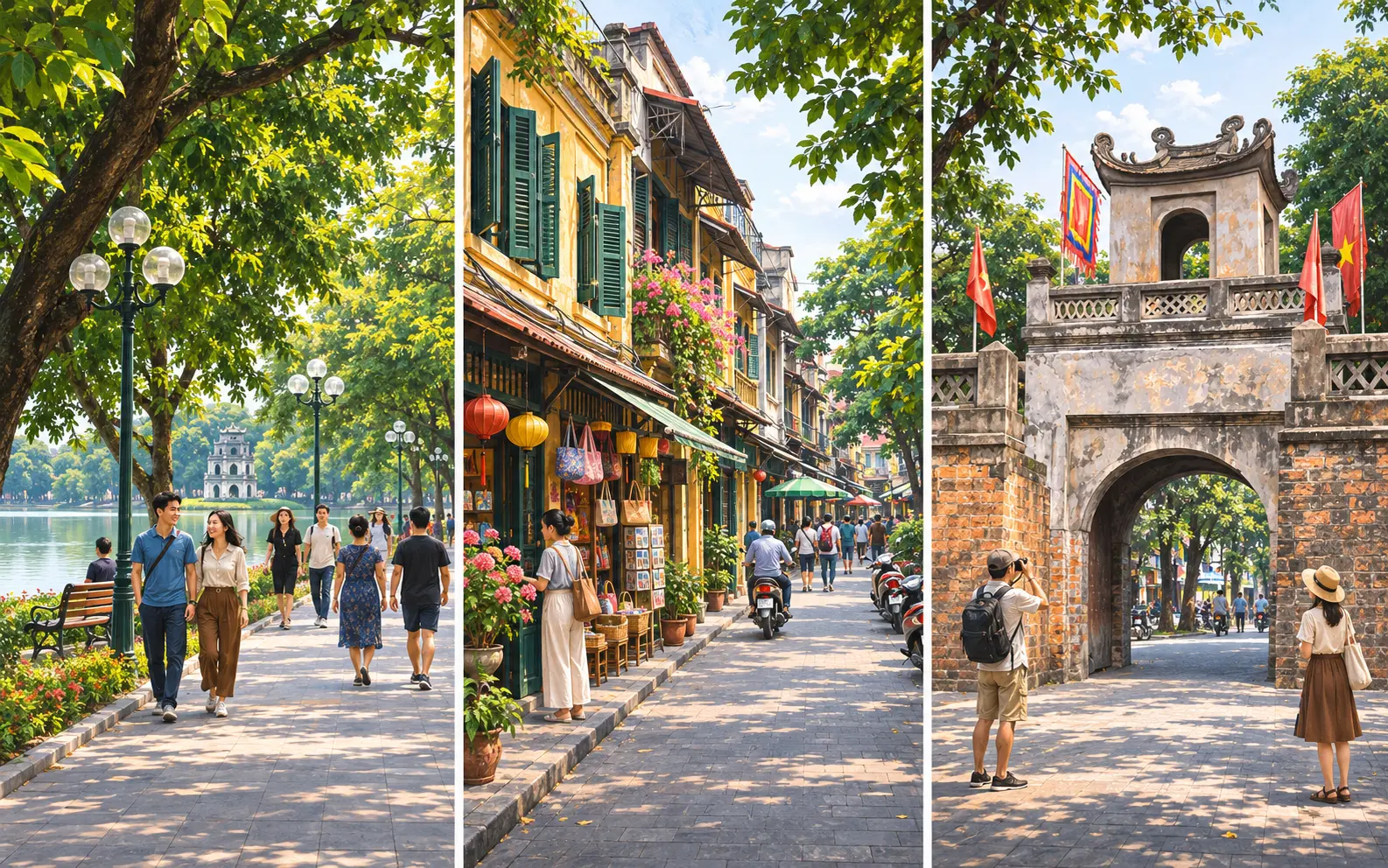
Hoan Kiem Lake is an excellent first choice because the public lakeside setting provides much of the atmosphere people come to central Hanoi to enjoy. You can watch the city change through the day, observe the trees and water, and take photographs from lawful public walkways. The Hanoi city tourism portal describes its pedestrian area as free, while Vietnam's national tourism authority identifies the lake as a central visitor attraction.
Enjoy the public lakeside promenade
Start with a simple walk rather than a race through a checklist. Look for views over the water, the changing streetscape and people relaxing along the shore. The lake makes an easy anchor for an independent city outing without requiring a guide or a pre-purchased experience. Do not assume the entire surrounding road is pedestrian-only at all times: vehicle arrangements can vary with weekends, public events and traffic management. Follow the actual signs and crossings when you visit.
See public monuments but keep Ngoc Son Temple admission separate
Public views of the lakeside, nearby monuments and the bridge toward Ngoc Son do not require buying the temple ticket. Entry into Ngoc Son Temple is separate and normally ticketed for a general adult. The Hanoi monuments management board publishes a general-adult fee and specific exemptions, subject to eligibility. If you want to go inside, consult the manager rather than treating a free lake walk as proof of free temple admission. For a no-ticket outing, enjoy the public-side view and continue along the lake.
Explore Hanoi’s Old Quarter on your own
The Old Quarter rewards attention to ordinary street life: narrow commercial streets, closely packed buildings, different crafts, small courtyards and the rhythm of local trade. Independent walking on public streets has no attraction admission, although spending money at a shop, café or temple is a separate choice. The national tourism website's Old Quarter guide is a useful starting point for the neighborhood's background, not a guarantee that every place it mentions is always open or free.
Follow public streets at your own pace
Choose a few streets and let the details lead you: old façades, signboards, workshop displays seen from public areas and the mixture of residents and visitors. Respect working shops and homes, step aside when people need to pass, and ask before taking close-up photographs of people or entering private spaces. Pavements can be crowded or obstructed; crossing traffic safely matters more than reaching every named photo stop. No paid guide is required to enjoy a normal public-street walk.
See Ô Quan Chưởng from the street if access allows
Ô Quan Chưởng, a surviving city gate, can add a heritage detail to an Old Quarter stroll. Treat it as an exterior observation from a lawful public location, not an invitation to enter an interior or walk into traffic for an uninterrupted image. Construction, crowd management and current street access may affect what you can comfortably see. If the public vantage point is blocked, continue your walk; no single photo is worth ignoring a barrier or road-safety instruction.
Check whether Phung Hung murals can currently be viewed
The Phung Hung street-art area appears in walking-route descriptions and may be worth checking if it suits your interests. Paintings, installations and the surrounding street can change through repairs or other works, so do not assume every historic image is still on display. Check current photographs or local notices before making it a special detour. Enjoy any visible art from the normal public area; never enter a closed work zone just to reach a mural.
Enjoy architecture without buying an entrance ticket
Hanoi's streets let you appreciate architecture without automatically paying to enter the buildings. This is especially useful when you have limited time or prefer an unstructured walk. The key is to describe precisely what is available for free: a public exterior view, not a museum admission, church service, backstage tour or evening performance.
See St Joseph’s Cathedral from its public surroundings
The cathedral's façade and busy surrounding streets are recognizable parts of central Hanoi's urban landscape. You can look at the exterior from the public area, notice how the building relates to its neighborhood and pause respectfully where pedestrians are allowed. Worship services, renovations, ceremonies and management arrangements can affect entry. Even if some visits are sometimes free, this guide does not promise unconditional access inside a place of worship. See the official tourism walking suggestions for broader area context.
View the French Quarter and Opera House exterior
For a change from the Old Quarter's compact commercial streets, consider the public streets around the French Quarter and the Hanoi Opera House. Architectural details, streetscapes and public squares can be interesting without entering a venue. Performances and formal tours are separate activities; the national tourism listing has described renovation-related restrictions at the Opera House. Do not assume the interior or a show is free, running today or accessible without a booking. Use open public viewpoints and keep a flexible plan if the surrounding area is restricted.
Choose free weekend options in central Hanoi
A weekend can bring extra atmosphere, but it also introduces changing schedules, large crowds and temporary traffic controls. A good free activity is to enjoy a pedestrian-friendly public space when it is officially operating, without relying on any particular band, performance or market stall. The city pedestrian-space listing and Dong Xuan and night-market listing describe the free-access concept; always check any date-specific notice.
Check the Hoan Kiem pedestrian streets for the current weekend
On operating weekends, parts of the lake area can become more comfortable for strolling and watching outdoor cultural activity. That does not mean every nearby street is closed to vehicles, or that a specific closure timetable will apply during your visit. Events may extend, move or interrupt usual arrangements. If you are planning around a particular evening, consult city announcements and follow local signs; a free pedestrian space is not a promise of a particular entertainment program.
Browse Dong Xuan and the Old Quarter night market without shopping
Browsing rows of merchandise, watching market life and enjoying the public atmosphere can be free. Buying a souvenir, sampling food or taking paid transport is optional spending. The city tourism portal describes Dong Xuan Market and weekend night-market browsing as no-admission experiences, but do not make an unverified promise that all stalls will operate on a given night. Avoid obstructing busy trading areas and keep valuables secure in crowded streets.
Treat performers and stall line-ups as possibilities, not guarantees
Outdoor music, games and seasonal activities may make an evening memorable, but they depend on organizers, weather and the day's program. Treat any live act as a bonus rather than an item you can reserve for free. If a performance or tour is ticketed, decide whether to pay instead of adding it to your zero-ticket itinerary. Check city event notices for date-bound special programming; do not confuse a one-off free festival with a permanent free attraction.
Discover small heritage houses with published no-fee entry
These lesser-known stops are a potential advantage over generic lists of big landmarks. The Hanoi monuments management board lists three central historic properties as không thu phí (no admission fee), with a weekday visiting schedule. That is a dated published schedule, not confirmation that a particular building is open at this moment or that special events never affect entry.
48 Hang Ngang: a house associated with the Declaration of Independence
At 48 Hang Ngang, the historical story reaches into the period when President Ho Chi Minh prepared the Declaration of Independence in 1945. Rather than approaching this as a selfie backdrop, use it as a short, respectful history stop. The site's manager publishes a no-fee weekday listing; check its updated page or contact details before going, particularly on a holiday. If access is closed for an event, do not assume a staff-only or secured interior is available to visitors.
5D Ham Long: a small revolutionary-history site
5D Ham Long is associated with an important early Communist Party history site, managed as a heritage property rather than an ordinary commercial attraction. The manager's published table also lists no admission fee and weekday hours. It is appropriate for readers who are curious about a more specific part of Hanoi's twentieth-century history, though the scale and visitor experience differ from a large museum. Be prepared for management instructions, possible closures and respectful visitor conduct.
90 Tho Nhuom: another history stop listed without an entry fee
The listed historic site at 90 Tho Nhuom is associated with revolutionary history and is another example of a site whose manager publishes a no-fee entry category. It should be considered a conditional heritage stop, not a promise of unrestricted access to every room. If you want interpretation, a group visit or access for someone with specific mobility needs, seek direct confirmation. The no-fee listing does not automatically cover any special service or guided program.
Confirm weekday opening, holiday notices and visitor access
All three are shown with a weekday visiting window on the manager's page. Do not plan them as guaranteed Saturday or Sunday destinations, or assume that the posted window overrides a closure for maintenance, security or an event. Consult the official contact and monument table close to your visit. A visitor with restricted mobility should ask about stairs, thresholds and accessible facilities rather than treating a free-entry listing as an accessibility certification.
Consider other free lakeside strolls
Not every useful public walk needs to be beside Hoan Kiem Lake. West Lake and Truc Bach can provide a quieter change of scenery for some visitors. Here, however, the evidence supports the general idea of public waterside streets, not a guaranteed continuous loop, universal pavement quality or a named accessible route. The national tourism walking guide describes broader Hanoi walking possibilities, but your actual route still needs ordinary street judgment.
West Lake: choose an accessible public section
West Lake is large, with different stretches of public street, residential frontage and private business premises. Pick an area that is clearly open to pedestrians and suited to the time and weather, rather than setting off to circle the entire lake on the assumption of uninterrupted walking space. You may enjoy the water and everyday lakeside scenery without buying a café item. Do not use restaurant terraces, private docks or a closed path as shortcuts.
Truc Bach Lake: view from public lakeside streets
Truc Bach offers another setting for a simple walk and city observation. Keep the activity limited to open public roads or pavements and use safe crossings. Nearby cultural buildings, food shops and transport services have separate arrangements, and some visitors may find sections difficult because of narrow or uneven surfaces. If it is raining heavily, dark or crowded, shorten the walk or choose another public area. This is a flexible option, not a tested route for wheelchairs or strollers.
Pick a self-guided free sightseeing plan
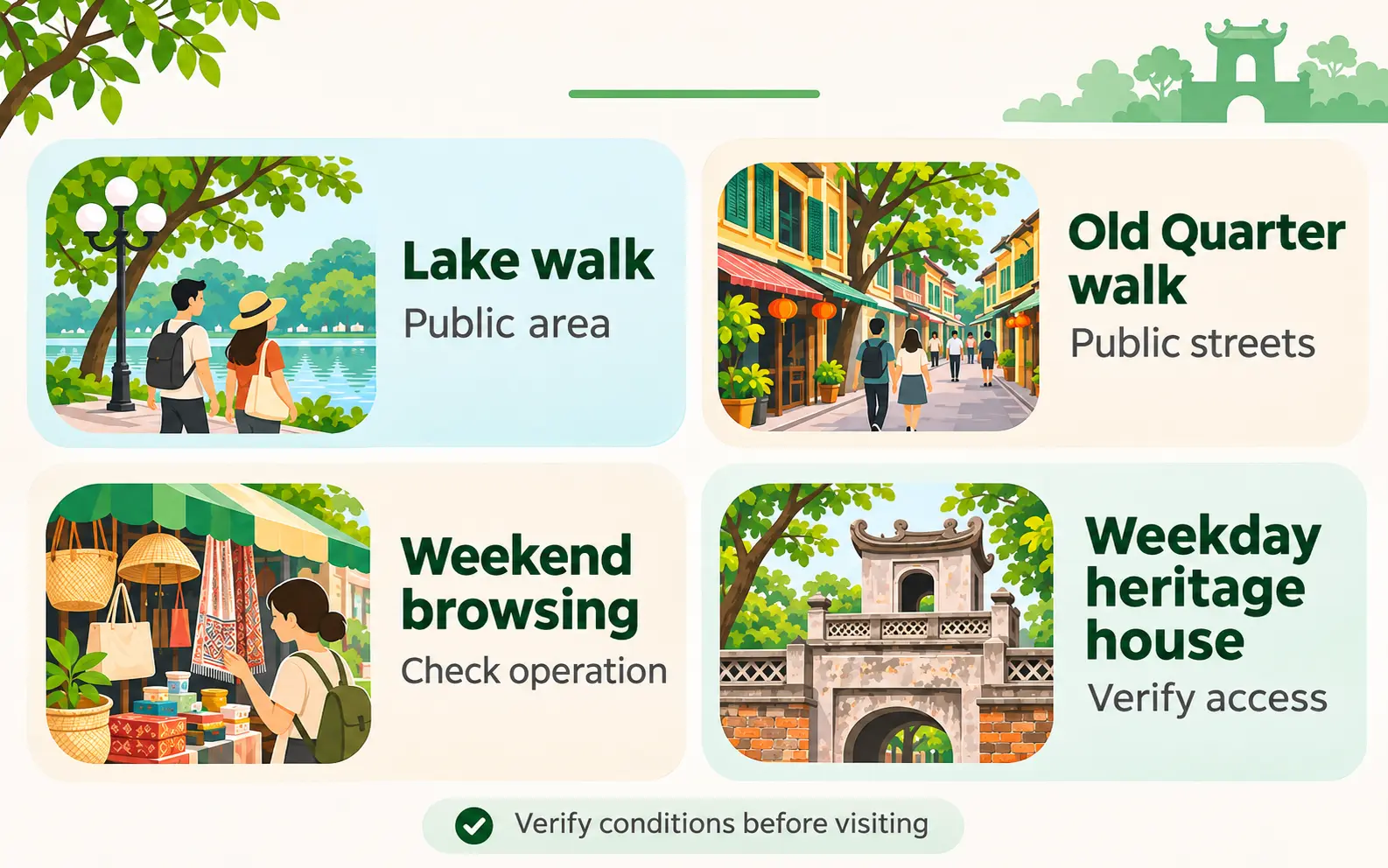
You do not need a paid walking tour to combine these ideas. The four outlines below are area groupings, not directions with measured distances or verified travel times. Check current streets, site status, accessibility and transport for the specific day; change the order if road closures or weather make a connection inconvenient. Any activity described as "free" refers to the stated public access or no-fee admission, not the entire cost of reaching it.
Short central-Hanoi idea: public lake and nearby streets
Begin with the public surroundings of Hoan Kiem Lake. Enjoy the water, public monuments and surrounding architecture, then continue into open streets of the Old Quarter if time and energy permit. Keep Ngoc Son Temple as an optional paid visit, not an included free stop. This is a good default when you are arriving in Hanoi, have limited time or simply want a low-pressure introduction without a rigid checklist.
Half-day idea: Old Quarter and public exteriors
Choose a few Old Quarter streets, admire Ô Quan Chưởng only from an appropriate public viewpoint if available, and decide whether a cathedral exterior or another central public landmark suits the day. You can add public street architecture in the French Quarter, but do not assume every suggested place is directly connected by a short or safe pedestrian route. Use your preferred map, check road crossings and adjust the plan to your own pace.
Weekend variation: add a pedestrian zone or market browsing
If the Hoan Kiem walking streets are operating, enjoy their public atmosphere without buying anything. Later, consider browsing the night-market area when it is actually running. Weather, crowd controls and events can affect both. A weekend outing is still worthwhile even without a scheduled show: watching normal street life and public activity can be the main experience. Avoid promising an exact performer, stall, stage or start time.
Weekday variation: choose one verified heritage house
On a regular weekday, consult the management listing and consider adding one of the no-fee heritage properties at 48 Hang Ngang, 5D Ham Long or 90 Tho Nhuom. These are alternatives rather than a compulsory three-stop circuit. Check the day-specific opening notice and whether you can visit independently. A smaller, meaningful history stop can be more satisfying than adding a ticketed site merely to increase the list count.
Which popular Hanoi attractions are not always free?
A short explanation of what is not included can save more money than another list of purported free sights. Different locations within the same district can have different admission systems. Children or other eligible groups may receive exemptions that do not apply to every international adult. One-off holiday waivers also do not establish normal year-round free admission.
| Place or experience | Safe editorial classification | Authority or action |
|---|---|---|
| Hoan Kiem Lake / Ngoc Son Temple | Free public lakeside walk; temple interior ordinarily ticketed | Site manager |
| Temple of Literature | Ticketed heritage complex for a general adult | Venue manager |
| Hỏa Lò Prison | Ordinarily ticketed; limited exemptions | Venue ticket page |
| Imperial Citadel of Thang Long | Ordinarily ticketed; check eligibility | Heritage center |
| Water puppet performance | Performance admission is a separate paid decision | Check the actual theatre/operator |
| Ho Chi Minh Mausoleum interior / One Pillar Pagoda | Fee, eligibility and access not conclusively reconciled here | Seek direct site-management instructions |
Ngoc Son Temple is different from Hoan Kiem Lake
Do not mistake a free lakeside stroll for a free entry ticket to Ngoc Son Temple. The management board's published admission table sets an ordinary adult fee with defined reductions and exemptions. You can still enjoy the public waterfront without crossing into the ticketed attraction. Check details for your visitor category if you wish to enter.
Temple of Literature is generally a ticketed interior
Văn Miếu–Quốc Tử Giám is one of Hanoi's significant heritage sites, but a standard adult visit is normally ticketed. The heritage center's visitor information provides current published rates and concession rules. If you are weighing a paid historical visit, see our separate Temple of Literature Hanoi visitor guide. This free-activity article does not duplicate that ticket and opening-hours guide.
Hỏa Lò, Imperial Citadel and water puppets are separate paid activities
Hỏa Lò Prison's official ticket page and the Imperial Citadel heritage-center notice both describe paid entry for ordinary visitors, with defined exceptions. Water puppet shows likewise involve a distinct performance admission: a public walk past a theater is not a complimentary show ticket. Explore these only if they fit your paid-activity budget. Do not let a website's word "cheap" turn an optional purchase into a supposed no-cost attraction.
Mausoleum and One Pillar fees and access require manager-specific confirmation
Some tourism descriptions and older travel lists give conflicting impressions of fees around Ba Dinh, the Ho Chi Minh Mausoleum, One Pillar Pagoda and neighboring heritage areas. Their grounds, interiors, visitor eligibility, security requirements and opening arrangements are not interchangeable. Because eligibility and access conditions differ by site and visitor category, neither interior is classified here as a verified free activity. Check the Mausoleum management authority and the relevant on-site notices before making a dedicated visit; follow any security instructions for public areas.
Avoid unsafe or unverified railway shortcuts
Not everything appearing in a popular free-Hanoi list is an appropriate visitor recommendation. Rail corridors and bridge infrastructure can be both tempting photo locations and unsuitable places for casual sightseeing. A public-free guide should not encourage dangerous access merely because an image is popular online.
Do not plan a free visit on Hanoi Train Street tracks
Hanoi's railway café corridors have been subject to safety enforcement and warnings. Nhân Dân has reported tourism-authority restrictions on organizing tours in the railway corridor. This guide does not recommend entering the tracks, crossing barriers, waiting near moving trains or booking a supposedly guaranteed trackside viewpoint. Older tourism articles mentioning the area do not override safety restrictions. Choose the public Old Quarter and lakeside alternatives instead.
Do not recommend Long Bien Bridge crossing without a current access check
Long Bien Bridge is historically significant, but that does not prove that a particular bridge walkway or railway-adjacent route is appropriate, open or safe for independent sightseeing today. A railway-adjacent crossing should not be assumed to be an authorized visitor route, so it is excluded from the suggested walks. If you are interested in the bridge's history, look for a clearly public, safe perspective and follow posted rules; do not approach rail infrastructure or assume an online walking itinerary is current.
Plan a low-cost day without misleading yourself
The most useful free itinerary is one you can carry out comfortably, safely and honestly. Public-space status is only one variable. A gentle plan with clear backup options will usually work better than a maximal list of landmarks with uncertain fees, closed gates and impossible connections.
Check official notices and opening arrangements close to your visit
Use the linked city tourism and heritage-site pages as a starting point, then check local announcements for events, holidays and one-off closures. A one-off free-admission event or promotion is not a permanent exemption. Distinguish source publication dates from your intended visit date. If your plan depends on one specific house or museum, contact its manager or confirm at the entrance before committing the rest of your day.
Cross roads carefully and account for heat or rain
Hanoi's historic center can be busy, and traffic rules and street surfaces vary. Use designated crossings where available, avoid stepping into moving traffic for photographs, and choose shoes suited to uneven pavements. In hot weather, take breaks and carry drinking water. During heavy rain, local flooding or storm alerts, reduce exposed walking and adjust your itinerary. A free afternoon should not depend on ignoring dangerous conditions.
Do not assume step-free access or unrestricted interiors
Public sidewalks may be narrow, interrupted or uneven. Historic sites can have thresholds and steps; some entrances are managed according to events or security rules. A continuous wheelchair-friendly loop and the accessibility of individual heritage properties should not be assumed. If you need a step-free route, mobility aid access, a stroller-friendly entrance or a quiet space, confirm the specific segment or site directly before setting out.
Allow for optional food, drinking water, toilets and transport
Eating street food, taking an organized tour, buying a market item or stopping for coffee is a personal choice, not a hidden inclusion in our list. Plan for toilets, water and travel between areas, especially with children or anyone who tires easily. Decide in advance whether your goal is no attraction tickets or spending as little as practical; the latter depends on where you are staying and how you travel. Never assume a public attraction provides free drinking water or other facilities without evidence.
Frequently asked questions about free things to do in Hanoi
These answers deliberately separate public walking from venue admission. Exact conditions may change, so the relevant manager or city notice takes precedence when you visit.
Can I walk around Hoan Kiem Lake for free?
Yes. The general public lakeside promenade does not require an attraction ticket, as reflected in the city's pedestrian-space information. This does not guarantee every surrounding road is always pedestrian-only or that nearby ticketed attractions are free.
Is Ngoc Son Temple included in a free lake walk?
No. Walking by the lake and entering Ngoc Son Temple are separate choices. The site manager publishes an ordinary admission fee with exemptions and reduced categories. You can enjoy the waterfront without buying a temple ticket.
Is Hanoi Train Street a safe free attraction?
It should not be treated as a recommended no-ticket activity. Railway safety restrictions and enforcement reports mean you should not enter the track area, bypass barriers or rely on a café to authorize railway access. Enjoy public-street photography elsewhere instead.
What free things can I do at weekends?
Depending on actual operation, you may be able to enjoy the Hoan Kiem pedestrian space and browse the Old Quarter night market without buying anything. Confirm the current weekend calendar, weather and crowd restrictions; specific shows and stalls are not guaranteed.
Is entry to the Ho Chi Minh Mausoleum always free?
Do not assume so. Information about the interior, surrounding public areas, nationality or eligibility and adjacent sites needs confirmation from the relevant management authority for your visit. This article does not classify the Mausoleum interior as a verified free attraction.
Bottom line: To enjoy free things to do in Hanoi, begin with Hoan Kiem Lake, public Old Quarter streets and street-side architecture; add the weekend market or a listed no-fee historic house only when the time and access conditions fit. Keep ticketed interiors and railway hazards out of your default zero-admission plan. This is independent editorial guidance, not a tour, ticket offer or guarantee of access.